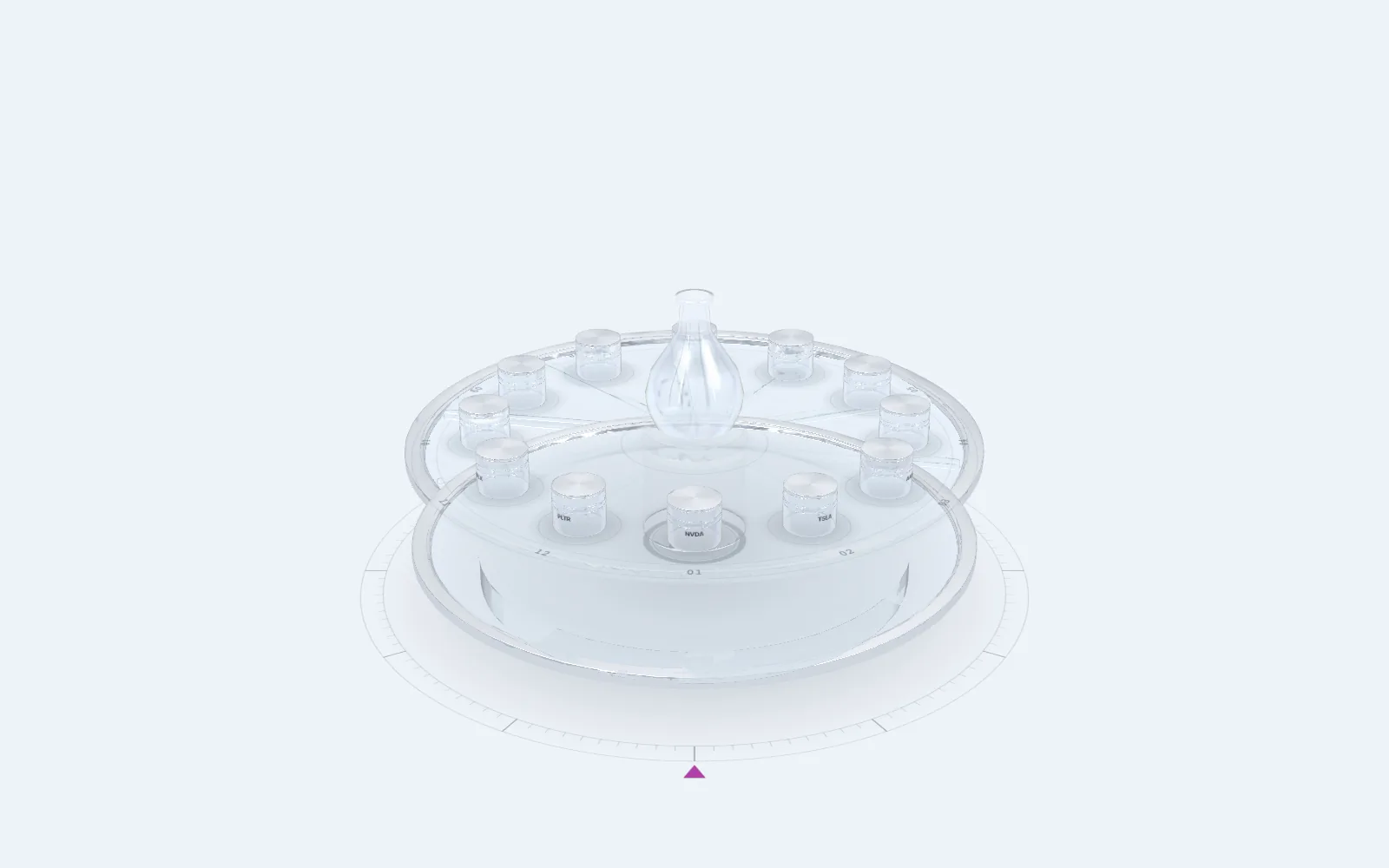
Fees buy the next stock, every 5 minutes at most. Burn the coin to take your share.
ETH sent to the larder can only become stock or redemptions. Sending the fees is on us; the rest is on the contract.
Quote from quoteRedeem(). No wallet needed to look.
Deposits
Every transfer of ETH into the larder, with its sender. Sending the creator fees here is something the team does by hand.
| Time (UTC) | From | ETH | Tx |
|---|
Sling log
Each line is one call to sling(): who called it, what ETH became, and any stop it had to skip.
| Time (UTC) | Stop | Bought | Spent | Price paid | Caller | Tx |
|---|
How it works
contract is enforced by code on Robinhood Chain. team is what we intend to do; nothing makes us.
- contract
ETH sent to the larder can leave only three ways: sling() turns it into stock, a 0.1% tip goes to whoever called it, redeem() pays people who burn $LARDER. There is no withdraw function.
- contract
Anyone can call sling(), at most once every 5 minutes. It spends 1/12 of the larder (never less than 0.002 ETH, never more than 0.25 ETH) on the next stop of a fixed 12-stock list and pays the caller a 0.1% tip.
- contract
Every buy must land within 1.5% of the pool's 30-minute TWAP. A stop that is paused by its issuer or out of range is skipped, never forced.
- contract
Burn $LARDER with redeem() to take your share of every stock, USDG and ETH in the larder: your coins ÷ (total supply − coins at the dead address).
- contract
The 12-stop list is fixed at deploy. After setToken() nobody can pause, rescue or change anything.
- team
The team intends to send the creator fees to the larder by hand and runs a small keeper that slings when it can. Either may stop; no schedule and no amount is promised. The deposits table shows every transfer.